
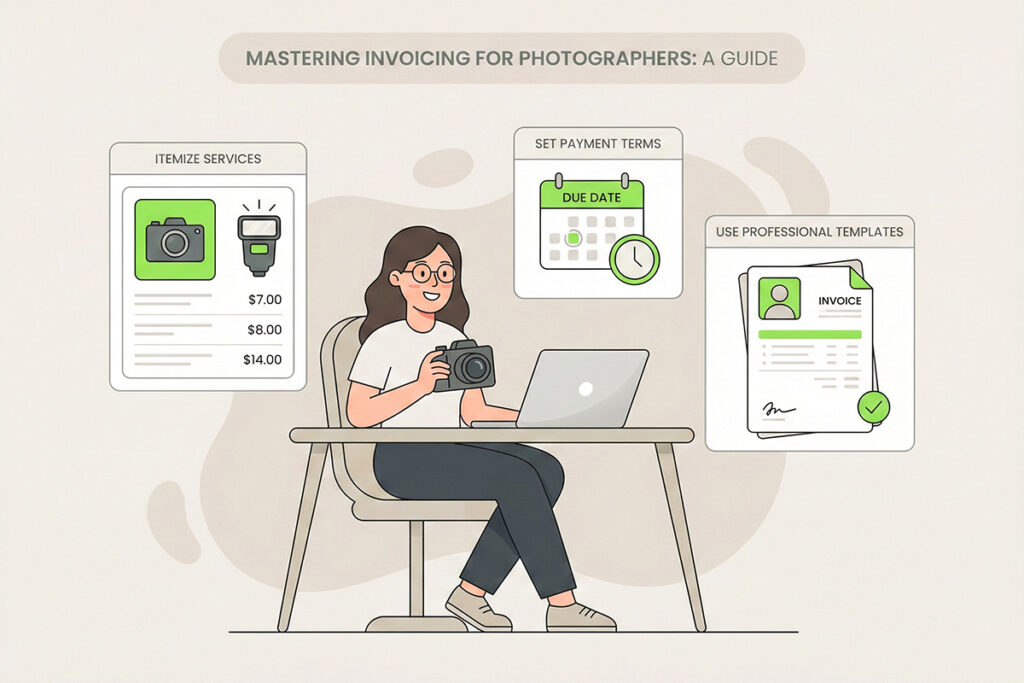
Invoicing serves as the formal payment request mechanism for photography services and functions as a crucial business operation component. Photography invoices document completed work and establish clear financial expectations between service providers and clients. Effective invoices specify project details, time allocation, equipment usage, and associated expenses, creating transparent communication regarding service value and costs.
Proper invoicing practices contribute to consistent cash flow management by establishing clear payment terms and deadlines. This documentation creates an organized financial record system that enables accurate income tracking, revenue analysis, and business performance evaluation. Photographers can utilize invoice data to identify seasonal patterns, assess pricing effectiveness, and calculate profit margins across different service categories.
Systematic invoicing also supports tax preparation and business compliance requirements. Detailed invoice records provide necessary documentation for expense deductions, income reporting, and financial audits. Additionally, professional invoicing enhances business credibility and client relationships by demonstrating organized business practices and clear communication standards.
Regular invoicing schedules help maintain steady revenue flow and reduce payment delays by setting clear client expectations and establishing consistent follow-up procedures.
Key Takeaways
- Invoicing is crucial for photographers to ensure timely payments and maintain professional client relationships.
- Clear payment terms and policies help prevent misunderstandings and late payments.
- Organizing and tracking invoices improves bookkeeping efficiency and financial management.
- Using invoicing software streamlines the billing process and reduces administrative workload.
- Incorporating branding and ensuring legal compliance enhances professionalism and protects the business.
Creating Professional Invoices for Photography Services
Crafting a professional invoice involves more than just listing services and prices; it requires attention to detail and an understanding of what clients expect. A well-designed invoice should include essential elements such as the photographer’s name and contact information, the client’s details, an itemized list of services provided, and the total amount due. Including a unique invoice number and the date of issue can help both parties easily track transactions.
Additionally, incorporating a due date encourages prompt payment and sets clear expectations. The layout and design of the invoice also contribute to its professionalism. Photographers can enhance their invoices by using consistent branding elements such as logos, color schemes, and fonts that reflect their artistic style.
This not only makes the invoice visually appealing but also reinforces brand identity. For instance, a wedding photographer might choose elegant fonts and soft colors to match the romantic theme of their work, while a commercial photographer might opt for a sleek, modern design that aligns with corporate aesthetics. The goal is to create an invoice that not only serves its functional purpose but also leaves a lasting impression on clients. For any inquiries, please contact us for more information.
Setting Clear Payment Terms and Policies

Establishing clear payment terms is crucial for managing client expectations and ensuring timely payments. Photographers should specify their payment policies upfront, ideally in their contracts or service agreements. Common practices include requiring a deposit before the shoot, outlining acceptable payment methods (such as credit cards, bank transfers, or checks), and detailing when full payment is due—whether upon delivery of images or within a specific timeframe after the shoot.
Additionally, photographers should consider implementing late fees or penalties for overdue payments. This policy can serve as a deterrent against late payments while also providing a clear framework for clients to understand the consequences of not adhering to agreed-upon terms. For example, a photographer might state that payments received more than 30 days after the due date will incur a 5% late fee.
By being transparent about payment terms and policies from the outset, photographers can foster trust with clients while protecting their own financial interests.
Organizing and Tracking Invoices for Efficient Bookkeeping
Effective bookkeeping is essential for any business, and photographers are no exception. Organizing and tracking invoices can streamline financial management and reduce stress during tax season. Photographers should consider implementing a systematic approach to invoicing that includes categorizing invoices by client name, date, or project type.
This organization allows for easy retrieval of documents when needed and provides a clear overview of outstanding payments. Utilizing spreadsheets or accounting software can further enhance tracking capabilities. For instance, creating a simple spreadsheet that lists all invoices along with their status—paid, unpaid, or overdue—can help photographers stay on top of their finances.
More advanced accounting software can automate this process by sending reminders for overdue invoices and generating reports on income over specific periods. By maintaining organized records, photographers can ensure they have accurate financial data at their fingertips, facilitating better decision-making and planning for future projects.
Handling Late Payments and Follow-Up Procedures
| Metric | Description | Typical Value/Range | Notes |
|---|---|---|---|
| Average Invoice Amount | The typical amount billed per photography job | 500 – 3000 | Varies by project type and client |
| Invoice Payment Terms | Timeframe clients have to pay the invoice | 15 – 30 days | Common terms are Net 15 or Net 30 |
| Late Payment Fee | Fee charged for overdue invoices | 1.5% – 3% per month | Helps encourage timely payments |
| Deposit Percentage | Portion of total fee required upfront | 20% – 50% | Secures booking and covers initial costs |
| Invoice Frequency | How often invoices are sent | Per project or monthly | Depends on client agreement |
| Payment Methods Accepted | Types of payment accepted for invoices | Bank transfer, credit card, PayPal | Offering multiple options improves payment speed |
| Invoice Numbering | System used to uniquely identify invoices | Sequential or date-based | Important for record keeping and audits |
| Tax Rate Applied | Applicable sales or service tax on invoices | Varies by location (0% – 15%) | Must comply with local tax laws |
Late payments are an unfortunate reality in many service-based industries, including photography. When faced with overdue invoices, photographers must adopt a proactive approach to follow-up procedures. The first step is to send a polite reminder email shortly after the payment due date has passed.
This communication should be friendly yet firm, reiterating the payment terms agreed upon and providing details about the outstanding invoice. If initial reminders do not yield results, photographers may need to escalate their follow-up efforts. A second reminder could be sent a week later, perhaps offering to discuss any issues the client may have encountered regarding payment.
In some cases, it may be beneficial to reach out via phone to establish a more personal connection and address any concerns directly. If payments continue to be delayed despite multiple reminders, photographers may need to consider more formal actions, such as sending a final notice or consulting with a collections agency. Throughout this process, maintaining professionalism is key; how photographers handle late payments can significantly impact their reputation and future client relationships.
Utilizing Invoicing Software and Tools for Streamlined Processes

In today’s digital age, leveraging invoicing software can greatly enhance efficiency in managing invoices for photography services. Numerous platforms are available that cater specifically to freelancers and small businesses, offering features designed to simplify invoicing processes. These tools often allow photographers to create customizable invoices quickly, automate recurring billing for repeat clients, and track payments in real-time.
For example, software like FreshBooks or QuickBooks provides user-friendly interfaces that enable photographers to generate professional invoices with just a few clicks. These platforms often include additional functionalities such as expense tracking, time management tools, and financial reporting features that can provide valuable insights into business performance. By utilizing such software, photographers can save time on administrative tasks and focus more on their creative work while ensuring that their invoicing processes remain organized and efficient.
Incorporating Branding and Personalization in Invoices
Incorporating branding into invoices is an effective way for photographers to reinforce their identity while also enhancing client experience. A personalized invoice can make clients feel valued and appreciated, which can lead to repeat business and referrals. Photographers can achieve this by including personalized messages or notes on invoices that express gratitude for the client’s business or highlight specific aspects of the project that were particularly enjoyable.
Additionally, using branded templates that reflect the photographer’s style can create a cohesive look across all client communications. For instance, a nature photographer might use earthy tones and natural textures in their invoice design to align with their artistic vision. Including elements such as watermarks or custom graphics can further enhance this branding effort.
By making invoices visually appealing and personalized, photographers not only improve their professional image but also create memorable experiences for clients that extend beyond the initial transaction.
Ensuring Legal Compliance and Documentation for Invoicing
Legal compliance is an essential consideration when it comes to invoicing in any business sector, including photography. Photographers must ensure that their invoices meet local tax regulations and include necessary information such as tax identification numbers if applicable. Depending on the jurisdiction, there may be specific requirements regarding what must be included on an invoice—such as itemized lists of services provided or applicable sales tax rates.
Moreover, maintaining proper documentation is crucial for tax purposes and potential audits. Photographers should keep copies of all invoices issued along with any correspondence related to payments. This documentation serves as evidence of income earned and can be invaluable during tax season or if disputes arise with clients regarding payment terms or services rendered.
By prioritizing legal compliance in invoicing practices, photographers can protect themselves from potential liabilities while ensuring smooth operations within their business framework.
For photographers looking to streamline their invoicing process, it’s essential to not only focus on billing but also on effectively marketing their services. A great resource for this is the article on how to market yourself on social media as a new freelancer, which provides valuable insights into building a strong online presence. You can read more about it here: How to Market Yourself on Social Media as a New Freelancer.
